
What Should a Kindergartener Be Able to Read?
A calm fall-to-spring guide to kindergarten reading skills, with simple examples and five-minute activities you can try together at home.
Quick answer
By the end of kindergarten, children are usually working toward reading simple words and short early-reader texts. They also learn letter sounds, listen for sounds inside words, blend sounds to read words such as sat and pin, and recognize some common words such as the and is.
That is the destination, not a first-day expectation. Kindergarten reading grows a great deal from fall to spring, and children do not all move through the steps on the same date.
Tonight, choose one small task your child can try: name a first sound, blend a word or read a short sentence. The fall, winter and spring sections are examples of how skills can grow, not a required calendar. Use the part that matches what your child is learning now.
What a kindergarten reading level means
A teacher may send home a letter, a book band, a number or a Lexile measure. Each label belongs to its own reading system; it is not a kindergarten grade by itself. Even the official Lexile grade-level charts show a range of scores that changes from the beginning to the middle and end of kindergarten.
Instead of trying to convert one label into another, ask the teacher three things: “Which system is this? Can you show me a book that fits? Which letter sounds or word patterns are you teaching now?” The book and the taught patterns tell you what to practice at home.
Use the label as one classroom clue, then notice the next small reading skill your child is working on. The sections below show how those skills can grow across the year.
Fall: sounds and print
At the start of kindergarten, much of reading happens through listening, talking and learning how print works. Your child may be working on:
- naming uppercase and lowercase letters
- saying the most common sound for a letter
- hearing the first sound in a spoken word
- following print from left to right
- talking about a story you read aloud
Here is a two-minute first-sound game:
Parent: “I spy something that starts with /m/. Listen: /m/, /m/.”
Child: “Mug.”
Parent: “Yes. Mug starts with /m/. Now you choose a sound for me.”
Say the sound, rather than the letter name, during the game. For m, hold the sound as “mmmm” instead of adding “uh.”
Try the free First Sound game when your child is ready to listen for the first sound in a word.
Winter: blend simple words
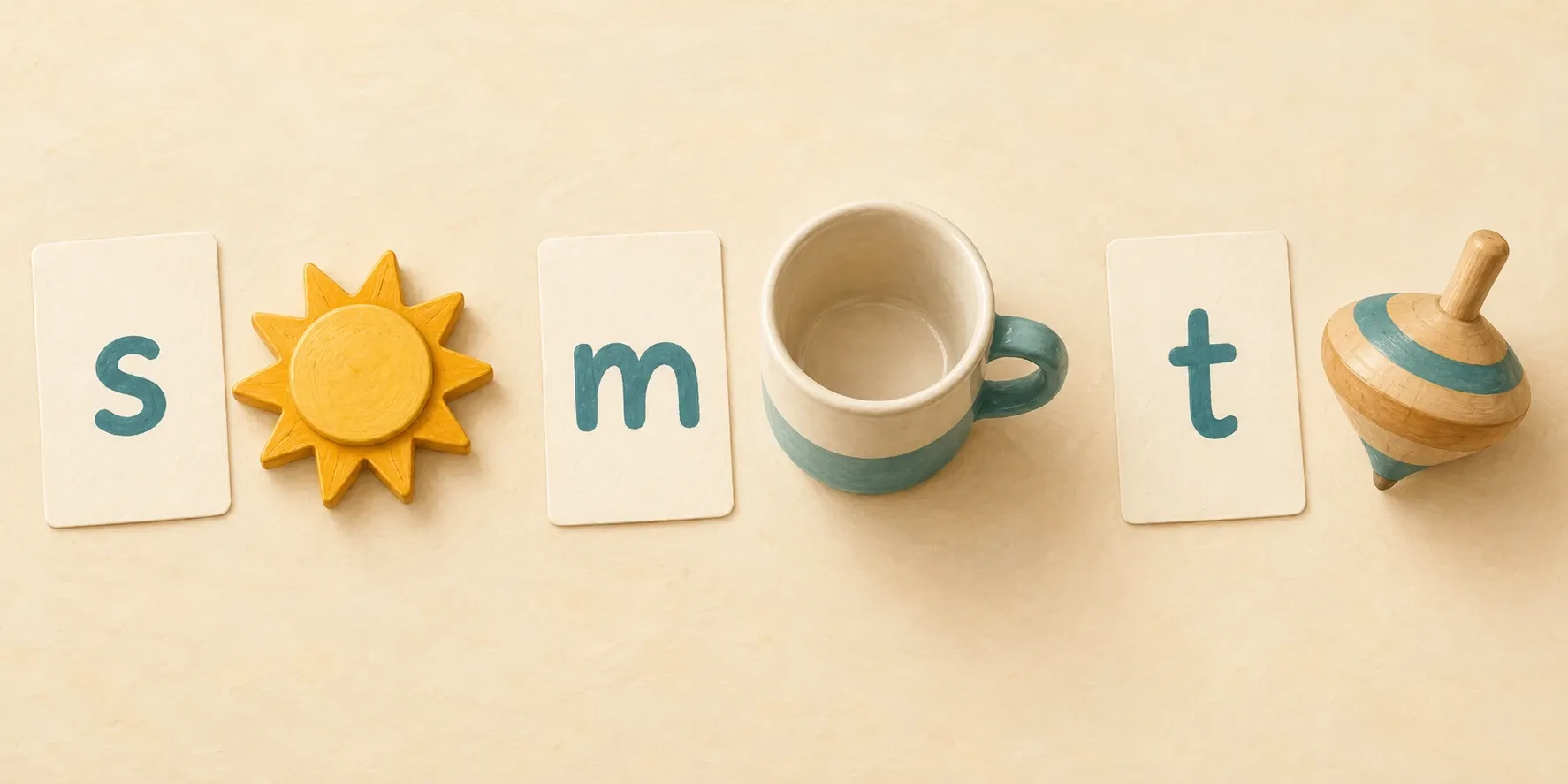
As letter sounds become more familiar, children can begin using them to read simple words. A useful first group is consonant-vowel-consonant words, often called CVC words. Sat, pin and hop each have three sounds that match the letters from left to right.
Choose a word whose letter sounds your child has learned. If they know s, a and t, point under each letter in sat and use this short script:
Parent: “Say each sound.”
Child: “/s/ /a/ /t/.”
Parent: “Slide them together: sssaaat. What word?”
Child: “Sat.”
Parent: “You looked at every letter. Read it once more.”
If your child says sit, point back to a: “This letter says /a/ as in apple. Say /s/ /a/ /t/, then slide them together.” Help with the sound they missed and try the whole word again.
Your child may also learn common words with an unexpected part. In is, i has its familiar short sound, but s says /z/. Point to each part: “/i/ /z/, is. This s says /z/.” Then read it in “It is hot.” Supply any other words your child has not learned yet.
For another short practice, use Read the Word or follow the steps in How to Teach Blending.
Spring: read short sentences
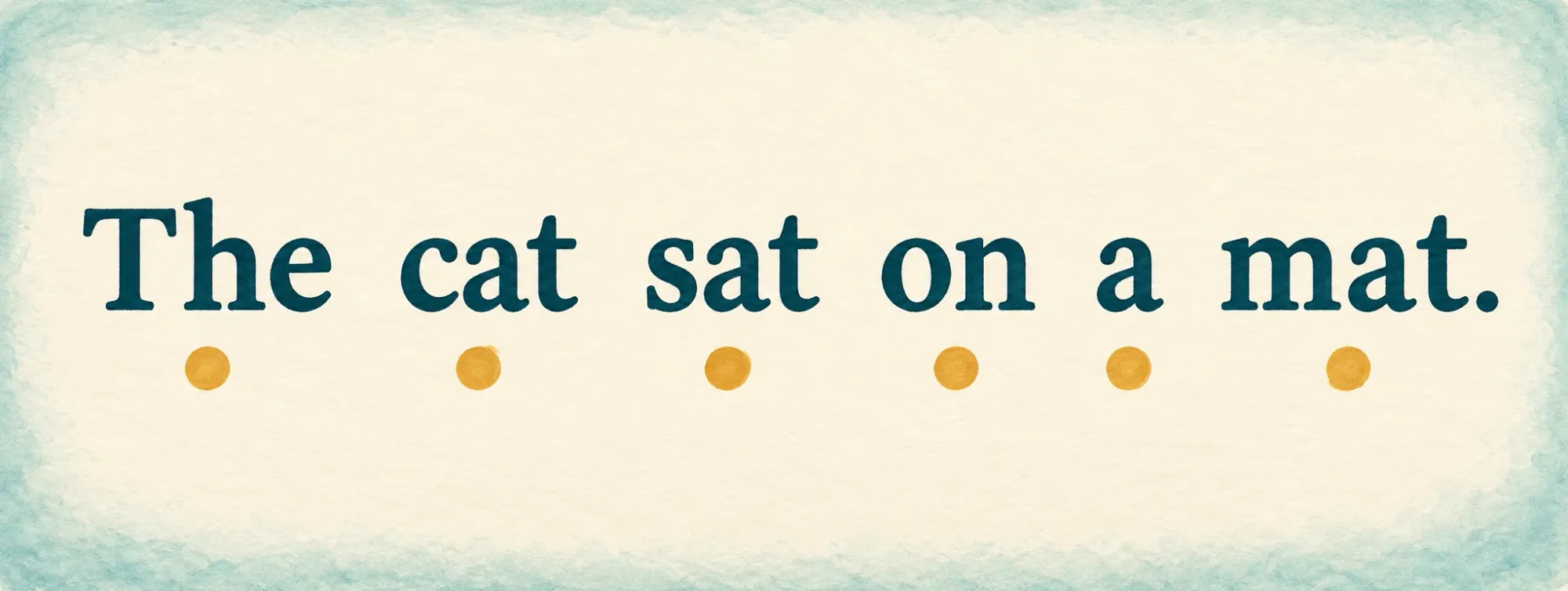
By spring, many kindergarteners are putting familiar words into short sentences and early-reader books. A sentence might look like this:
The cat sat on a mat.
Use this sentence once your child can blend its short-vowel words. Tell them the if they have not learned it yet. Let your child point under each word while reading. Then ask one question about meaning:
Parent: “Who sat on the mat?”
Child: “The cat.”
Parent: “Right. You read the words and knew what the sentence meant.”
The goal is more than saying the words. Kindergarten reading also includes understanding a simple story, retelling important parts with help, and talking about characters or events.
The Read the Line game gives your child practice reading one short line at a time.
Try it tonight
Choose the skill your child is practicing now and stop after five minutes.
Just learning sounds: Find three things that start with /s/.
Blending words: Read sat, pin and hop.
Reading sentences: Read “The cat sat on a mat,” then ask, “Who sat?”
If you want a matching browser activity, use the first line that sounds like what your child is doing now:
- Listening for the first sound: Try First Sound when your child can follow a spoken direction and name the common pictured objects. No letter recognition is needed.
- Connecting sounds to print: Try Letter Hunt when your child is learning the sounds for b, d, p and q. Hear a sound, then find its letters among the lookalikes.
- Blending sounds into a word: Try Stretchy Blend once your child has learned the sounds for the letters or patterns on screen. If a pattern is new, teach its sound first.
- Reading a short line for meaning: Try Read and Do when your child can read most of the words in a short line. Tell them an unfamiliar word, then let them make the sentence true on screen.
These games are practice choices, not a reading-level test. A quick note about what felt easy or hard gives the teacher a useful example.
Short, successful practice gives you a clearer picture than pushing through a book that is too hard. You can read the rest of the book aloud and enjoy the story together.
If they are not there
Start with the earliest step that feels steady. A child who is still learning letter sounds does not need a longer sentence. They need a few useful sounds and many chances to hear, say and use them. If letter sounds are still new, try a short first lesson online that needs no account: you hear the sounds for s, a and t, say them with your child, then try blending sat.
You can also ask the teacher one specific question: “Which letter sounds or word patterns are you working on now?” That gives you the right material for home practice and keeps the routine connected to class.
Keep a small note of the words you tried, so you can share a concrete example.
If the same step stays difficult after regular practice, share what you notice with the teacher. For example: “She knows the sounds for s, a and t, but cannot blend them into sat yet.” That is more useful than a label and helps the teacher choose the next support.
Kindergarten standards describe end-of-year skills. They are guideposts, not a home test. The Common Core kindergarten foundational skills include letter-sound knowledge, sound awareness, simple word reading, common words and emergent-reader text. The U.S. Department of Education’s kindergarten family reading activities show the same progression from hearing sounds to blending words and reading short text.
There are always free lessons online when you want a short activity that meets your child at the step they are practicing now.