
CVC Words: Make a Vowel Gallery
Choose one taught short vowel. Circle the middle letter, read three CVC words and draw one in a printable vowel gallery.
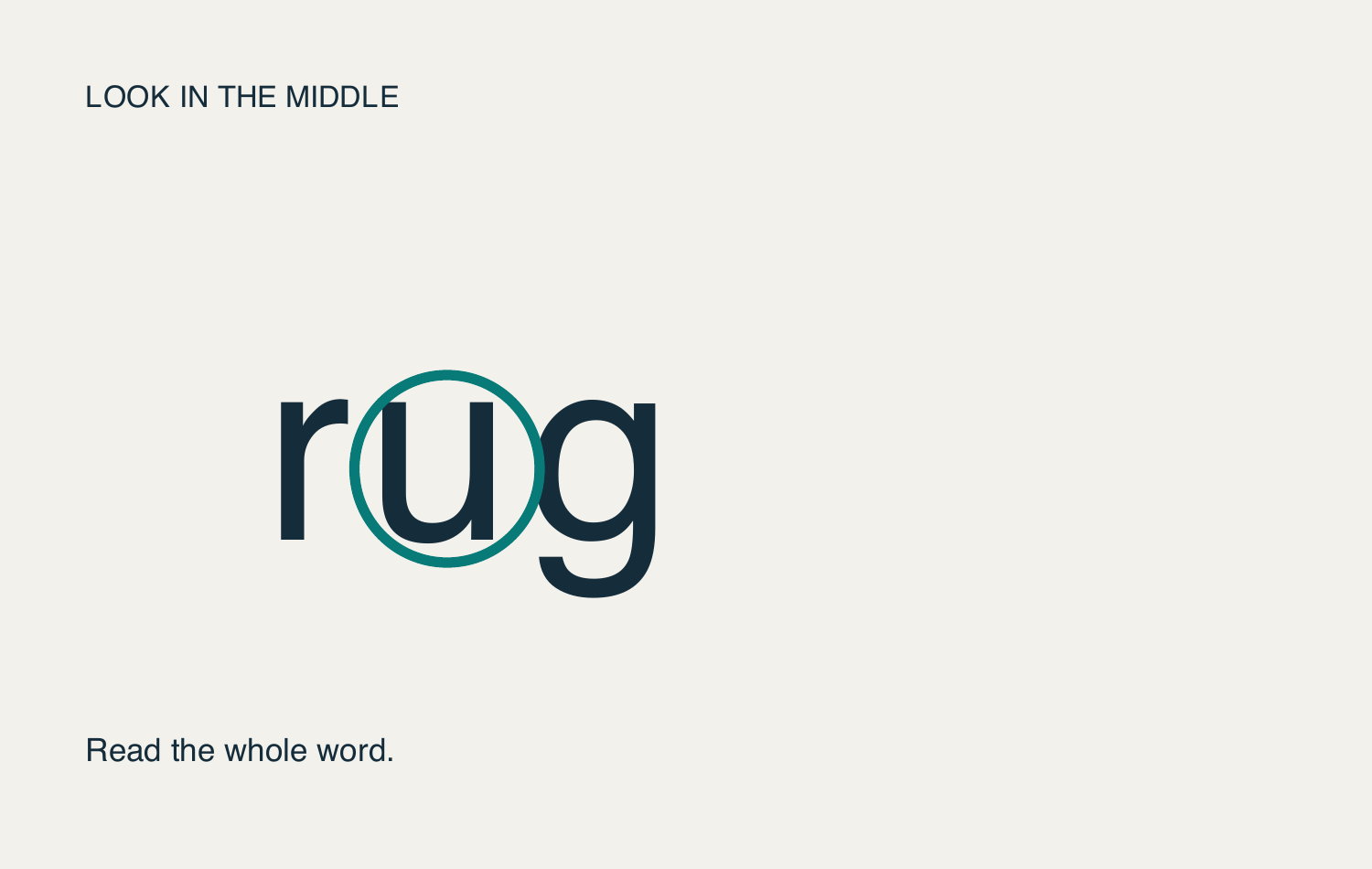
Your child can sound out short words, but the vowel in the middle still needs a closer look. Give them one small row of words, a pencil and a reason to notice that middle letter. This vowel gallery keeps the reading short and leaves room to draw.
Quick answer: Choose one short-vowel row below. Circle the middle letter in each word, read all three words and draw the meaning of one in the printable frame. Choose only words with spellings your child has already been taught.
What CVC means here
CVC stands for consonant, vowel, consonant. This page uses three-letter words with one sound for each letter. In rug, the letters spell /r/ /u/ /g/. Blend those sounds to read the word, then say it normally.
The middle vowel is short in each word on these lists. Say the vowel's sound in the word rather than its letter name. A child reading rug needs the sound in rug, not the name of the letter u.
Words can have three letters without following this simple pattern. This sheet deliberately keeps to a small set. It does not cover vowel teams, silent letters or every possible consonant spelling.
PRINT • CUT • KEEP
Your vowel strips
Five short-vowel strips. Choose one row, circle each middle vowel, read the whole words and draw one in the frame.
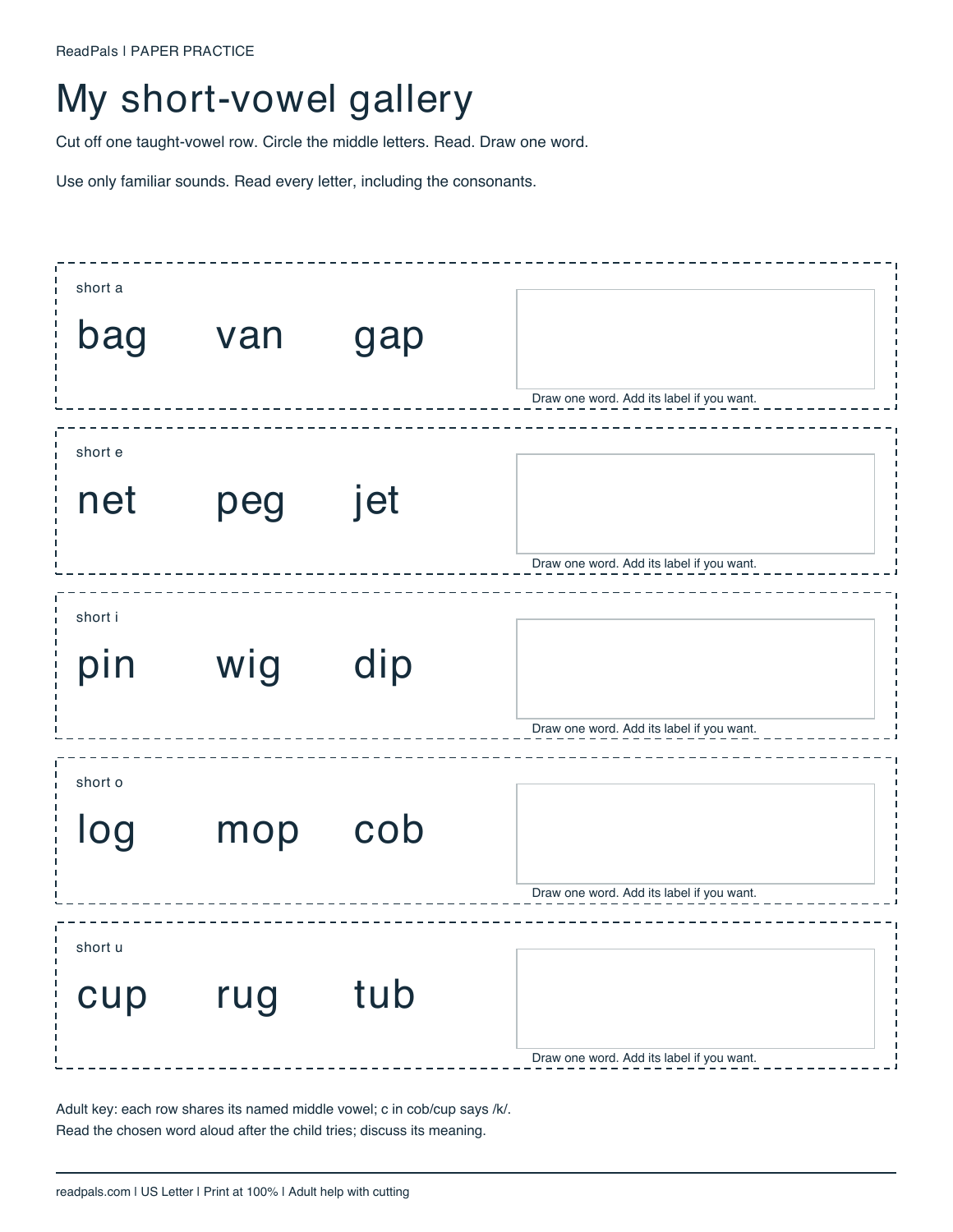
Print at 100% on US Letter paper. An adult handles cutting and any staples. No signup required.
Choose one vowel row
Ask your child's teacher which vowel and consonant sounds are ready for practice. You do not need to work through the rows in order. Pick the row that matches current lessons, then remove any individual word with an unfamiliar spelling or meaning.
- Short a: bag, van, gap.
- Short e: net, peg, jet.
- Short i: pin, wig, dip.
- Short o: log, mop, cob.
- Short u: cup, rug, tub.
A peg can hold something on a hook or line. A cob is the firm middle of an ear of corn. Explain those meanings before playing if needed. Use dip as the action of putting something briefly into a liquid, such as dipping a brush in water.
Read the row aloud yourself during preparation. For cob and cup, the letter c spells /k/. Use those words only when that spelling is familiar. Knowing the vowel does not make an untaught consonant spelling ready.
Make a vowel gallery
The printable has five detachable strips. Each strip contains three words, space to circle their middle letters and one empty drawing frame. An adult cuts off the chosen strip. Keep the other rows for later.
Read the first word together. Ask your child to circle its middle letter. Say, “This is the vowel we're listening for.” Do the same with the next two words. All three circles in this row will surround the same letter, while the letters around it change.
Now read the row from left to right, looking at every letter. Circling the vowel is a way to notice it, not permission to skip the beginning and ending sounds. Let your child point under each whole word after blending it.
Notice the middle
On the short-u strip, invite your child to circle the middle letter in each of the three words. Ask, “What do these middles have in common?” The marks should make the row's shared vowel visible without hiding the consonants around it.
Read the words using your child's usual routine. The blending guide has the full demonstration if you need it. Here, keep the focus on what the gallery shows: the same middle spelling appears inside different whole words.
Try pointing to cup, rug and tub in a different order. Ask your child to choose the word they want to draw. The circled vowel helps organize the gallery; it does not tell them which picture to make. The rest of the letters still determine the whole word.
Draw one meaning
Ask your child to choose one word from the strip and read it again. They can draw a rug, a cup or a tub in the frame. A simple outline is enough. They can add colors or a pattern if they want to make the gallery their own.
Write the chosen word under the drawing or let your child copy it from the strip. Keep copying optional. The main task was reading the words and noticing their middle vowel; a long handwriting exercise is not needed afterward.
Ask one meaning question: “Where would we put this rug?” or “What could go in this cup?” Their answer can be a gesture or a sentence. You are connecting the printed word to something they understand, not checking the quality of their art.
Adjust the vowel row
If two rows are on the table, cover one. Ask your child which row matches the vowel they are working on in lessons. You can write that vowel on the back of the chosen strip as a small label, then put the other strips away.
If several spellings on a row are new, set the strip aside. Ask the teacher for three suitable words using one familiar vowel and put those on blank paper instead. Keep the circle-and-draw format so your child can still make a gallery that fits their lessons.
If the drawing takes longer than the reading, save that strip before offering another. Let your child decide whether to finish the frame now or return later. A single completed row is enough to display; there is no need to fill all five vowels to make the page worth keeping.
Keep the useful strip
Put the finished gallery somewhere your child chooses. Another day, ask them to read one of its words before showing you the drawing. Add a different vowel row only when those spellings are ready. The goal is a small, readable collection, not five completed rows tonight.
Try tonight: Cut off one row. Circle its three middle vowels, read each complete word and draw one meaning. Keep the finished strip and stop.
ReadPals has short phonics games for another practice option. You can use this printable with any phonics lessons your child already follows.