
A Thanksgiving Word Hunt to Print
Print three known-pattern word cards for a Thanksgiving find, read and draw hunt, then use separate picture cards to check each word.
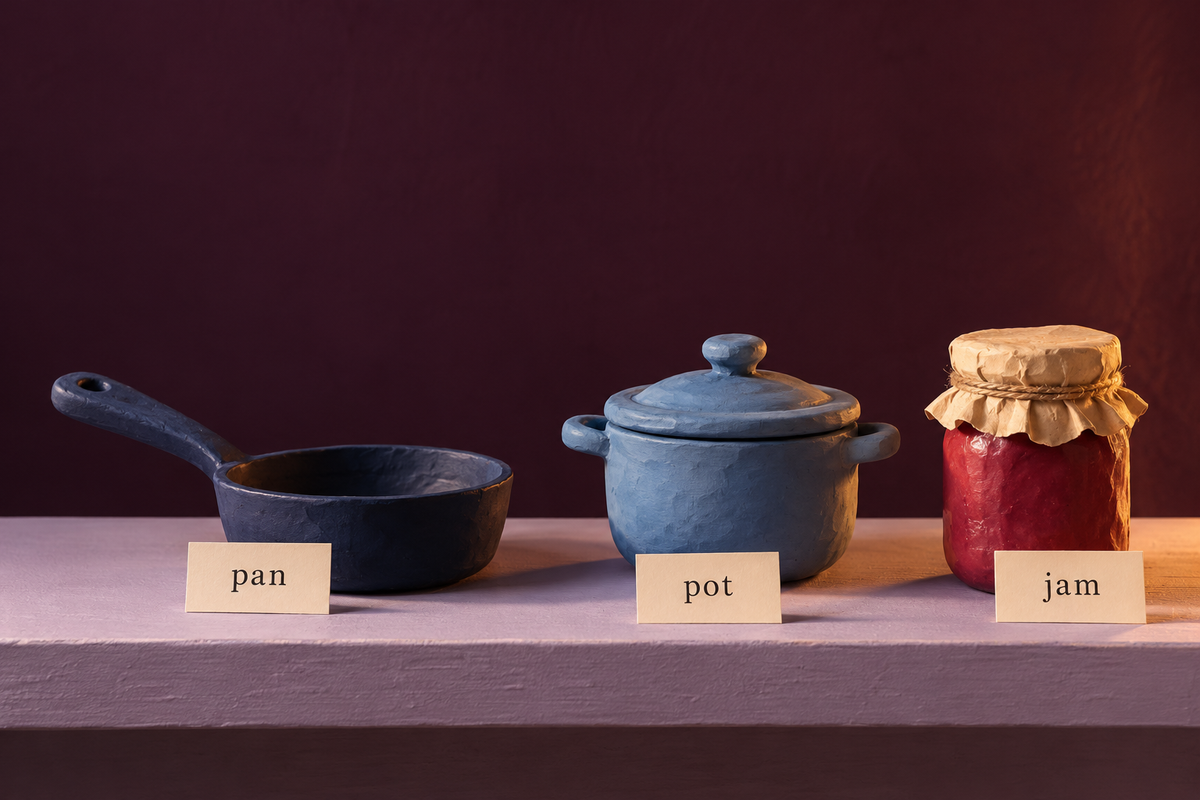
Print nine word cards, hide three, and let your child find, read and draw each word. Keep the picture cards out of sight until after the reading attempt so the pictures can check the word instead of giving it away.
Quick answer: Choose three cards made from letter sounds your child has been taught. Hide them in one room. Your child finds one card, reads it, draws it, then checks it with the matching picture.
Check the words
The printable uses yum, pan, pot, ham, nut, bun, jam, fig and nap. Your child does not need to read all nine.
Choose three words that match current phonics lessons. For example, use pan only if p, a and n have been taught. If a word includes a new sound, save it for another round or tell your child the sound.
For the first hunt, pan, pot and ham can work if all seven letters are familiar. A different set is fine.
Choose one useful trio
Check every letter in the three cards before hiding them. A card is a good fit when your child has been taught each letter-sound pattern and the short vowel in the middle. Do not choose a word because its picture will be easy to guess.
You can make the first round more manageable by repeating some letters across the trio. For example, pan, pot and nap reuse p and n. The child still has to check all three letters because the order and middle vowel change.
Set the other six word cards aside before the hunt starts. This keeps the promise clear: find and read three words, not finish a whole worksheet.
Print and cut
Page one has nine word-only cards with a drawing box under each word. Page two has nine separate picture cards for checking. Print both pages at 100%. Black-and-white printing works.
PRINT • CUT • KEEP
Your hunt cards
Two pages: word cards with drawing boxes and separate picture checks. Pick three words with taught spellings.
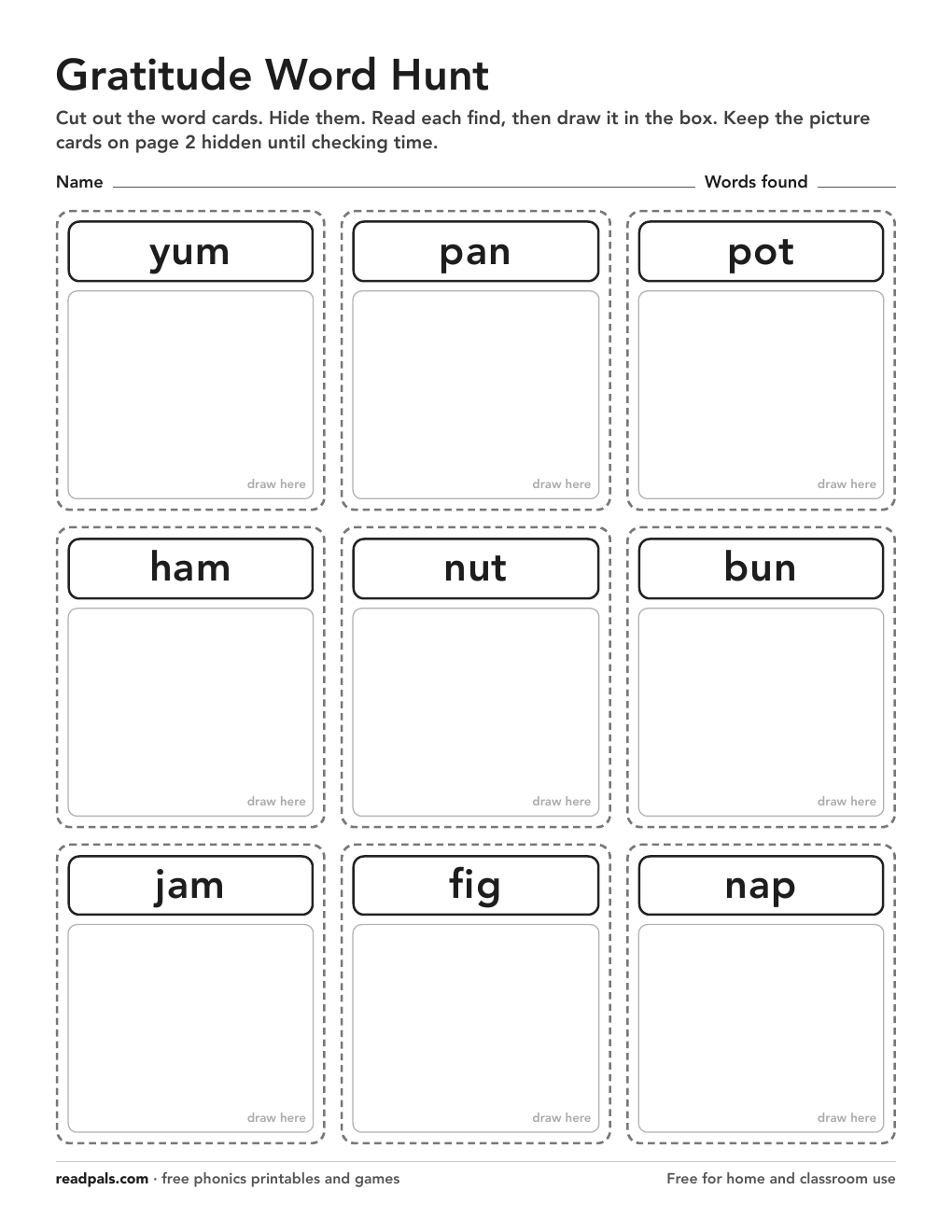
Print at 100% on US Letter paper. An adult handles cutting and any staples. No signup required.
- An adult cuts apart three word cards.
- Leave the matching picture cards together and face down.
- Hide the word cards where your child can reach them safely.
- Keep the drawing page or drawing boxes ready with a pencil or crayons.
Use one room and easy hiding places. The reading is the activity. The hiding should not become the hard part.
Before your child enters the room, place one card at each location with the printed word facing up. Keep cards away from stairs, hot surfaces and anything breakable. Put the three matching picture cards in a small stack at the table where drawing will happen.
Bring back the card
When your child finds a card, bring it to the drawing spot before showing a picture or pointing to an object. The hiding place is part of the hunt; it should not supply the word. A card beside a pan would make it easy to name the object without reading.
Read using your child's familiar routine. The blending guide gives the full demonstration if you need it. In this hunt, keep one repeated order: find the card, read it, then decide what to draw.
Let your child hold the card or place it beside their paper while reading. You can carry the crayon box, leaving them in charge of the discovery. If they want you to find a card next, ask them to hide one of the cards already read rather than adding another word to the set.
Check the hiding spots together before starting another round. Use places your child can reach without climbing, opening appliances or going outdoors alone. A partly visible card on a low shelf is enough; making the search difficult is not the aim.
Draw the find
After the word is read, your child draws it in the box. The drawing can be simple. A few lines for a pan or a pillow for nap are enough.
Drawing gives the word meaning and gives the child something to make. It is not an art test. You can label an unclear drawing together after the reading turn.
Keep the word card beside the drawing box while your child draws. They may copy the word underneath if they want, but handwriting is optional. The required sequence is still read first, then draw.
Check with pictures
Now show the three matching picture cards. Ask your child to place one picture beside each word and drawing.
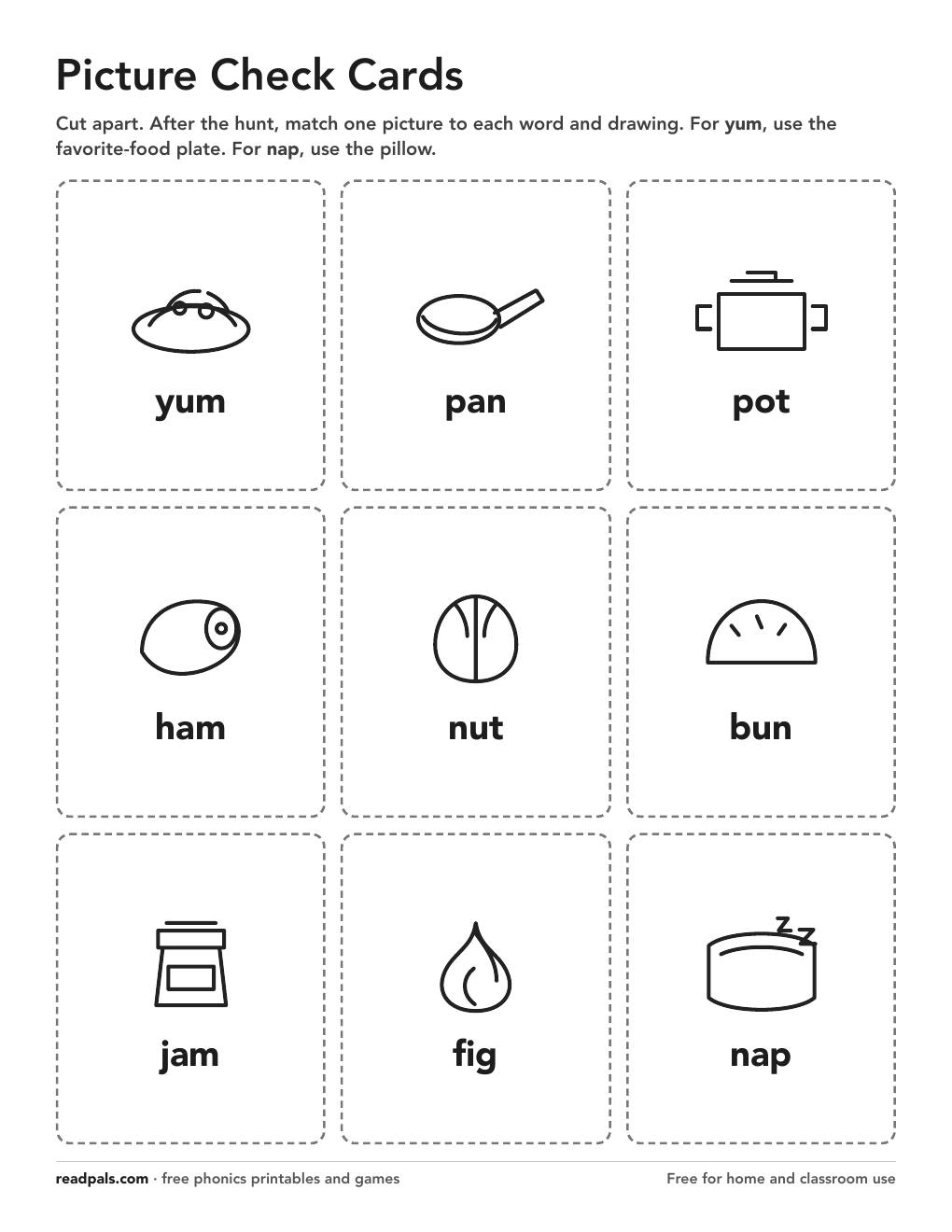
If a picture does not match, set it aside and check the printed card before choosing again. Keep the picture choices covered during that check. The published guide to word guessing explains why the picture should come after the reading.
For yum, the picture is a favorite-food plate. For nap, it is a pillow. Tell your child what the picture represents if that connection is not obvious.
After all three matches are checked, place each word, drawing and picture together. Ask your child to reread the three printed words in any order. This is a brief final read of the same cards, not a new round of the hunt.
Keep the hunt small
If the search uses all your child's energy, leave the final card visible and finish at the drawing spot. There is no prize for using every hiding place. You can keep the other cards in an envelope for another day.
If three drawings feel like too much, make one drawing and match the remaining word cards to their pictures after reading. Your child can return to the empty drawing boxes later. Keep the finished word, drawing and picture together so there is a clear record of the find.
Try tonight: Hide three known-pattern word cards in one room. Find, read and draw each one. Then use the separate pictures to check the words. Save the other six cards for another day.
For another day, ReadPals has short phonics games. This printable hunt works on its own.